Search My Blog
Saturday, 9 April 2011
Liquid Emulsion Experiments
These are the first liquid emulsion experiments I did. Some images are clear on the material however, not as much as I had hoped. I shall be continuing to experiment with the liquid emulsion and hopefully it will work!


Friday, 8 April 2011
Paul Baldersare
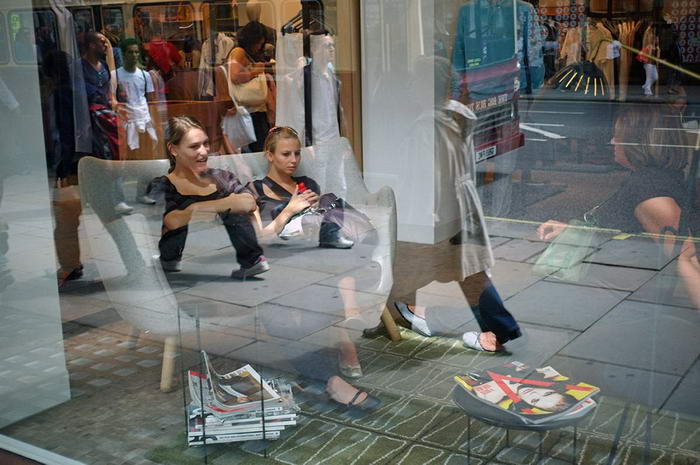
I love this photograph I found when I was researching the photographer, Paul Baldersare. It reminds me of the double exposure photographs I shot of reflections over the Summer 2010 and the photo realist painter, Don Eddy where his subject is shop windows.
The photograph is of women sat in a shop window on Regent Street in London. The reflection is very visible in the photograph. Vehicles and passers by can be seen in the window. The photograph looks like a double exposure with two images on one frame of film.
There is a lot going on in the photograph, every time I look at it I notice something different. There is many different colours and it is difficult to distinguish who is in the shop and what the reflection is.
Large Photographs
Moving away from a smaller scale, I have created some large 20x24 inch photographs. If the liquid emulsion does not work I shall be exhibiting large scale photographs in the degree show.
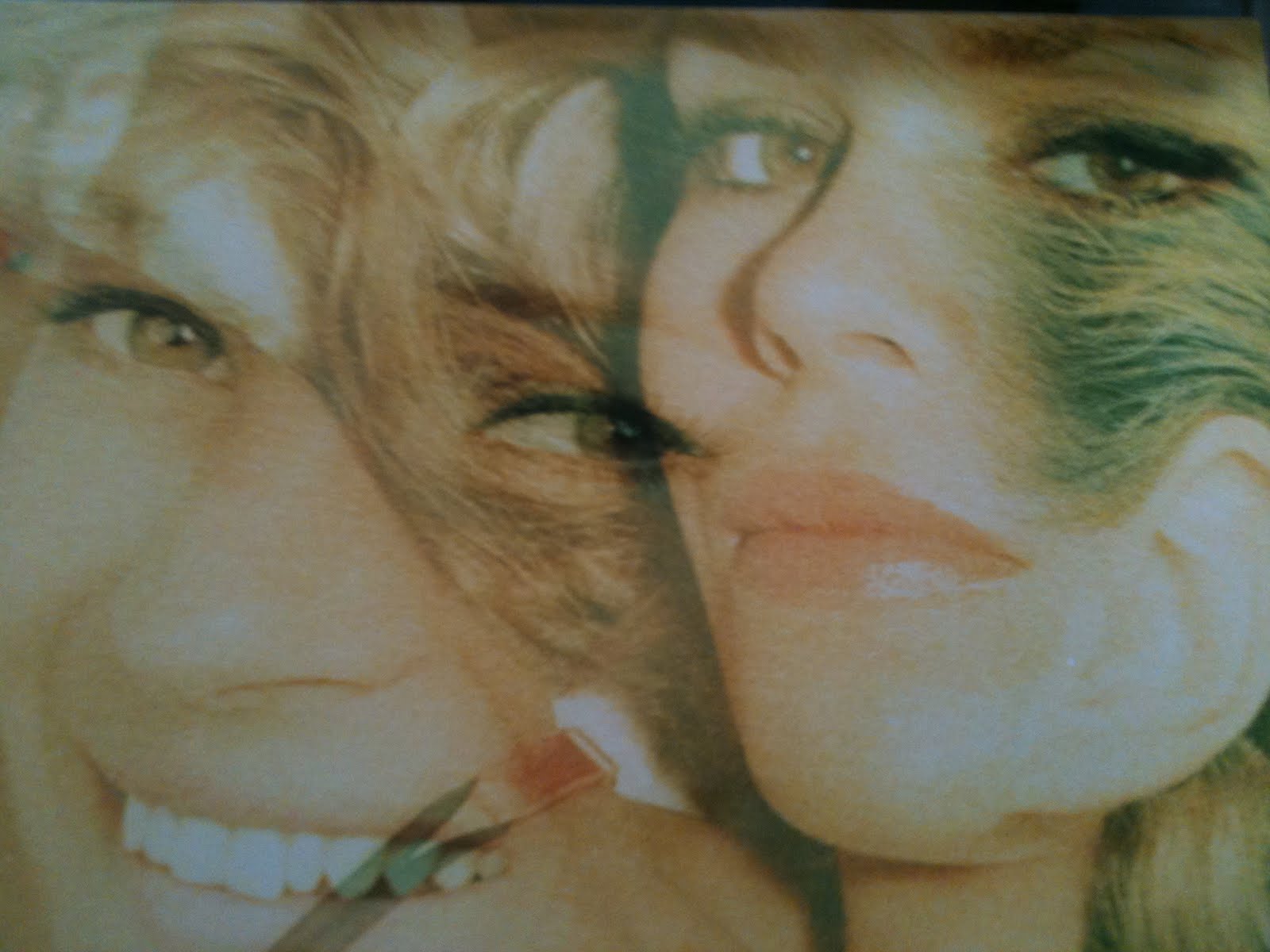
Here are examples of the large scale photographs. I particularly like the images of faces, and when the opposite flipped images are displayed together, the images are mirrored.
I shall be taking more photographs and developing them in large scale.


Here are examples of the large scale photographs. I particularly like the images of faces, and when the opposite flipped images are displayed together, the images are mirrored.
I shall be taking more photographs and developing them in large scale.
Wednesday, 6 April 2011
Macro Lens Photographs
I have taken photographs using a film with 100 ISO film speed. This is to ensure that when I develop the photographs the result is
more detailed and less grainy. Using a macro lens I zoomed into areas of the magazine so the image appears more abstract. I shot the film
using a large light box with a bulb similar to daylight, therefore when I develop the images the colours can be matched more accurately. Here are a few of the photographs I took:


more detailed and less grainy. Using a macro lens I zoomed into areas of the magazine so the image appears more abstract. I shot the film
using a large light box with a bulb similar to daylight, therefore when I develop the images the colours can be matched more accurately. Here are a few of the photographs I took:
Tuesday, 5 April 2011
Melanie Manchot
Melanie Manchot is an artist based in London. Her work almost exclusively involves the use of liquid photographic emulsion, coated on surfaces such as marble, glass and cloth, taking the form of wall-hung pieces and installations. The initial reason why Manchot began using liquid emulsion was because, working in black and white photography, she felt certain limitations. For example, photographic paper comes in a certain size, a particular finish and is ultimately always two dimensional.
At the beginning of using liquid emulsion Manchot spent a great deal of time experimenting. She has learnt different ways to coat the materials, such as, when putting it onto canvas, brushes are used. Or for non-porous surfaces, rollers and spray guns. However, one of the best ways that she achieved an even application was to pour the emulsion on and spread it with her fingers. This works particularly well when working with glass, using a household varnish to prepare the surface.
Body Study
Emulsion, oil paint and sand on canvas
100 x 100 cm

Jumping
Emulsion, oil paint and sand on canvas
45 x 70 cm

Ascent
emulsion, oil paint nad sand on canvas
40 x 70 cm
At the beginning of using liquid emulsion Manchot spent a great deal of time experimenting. She has learnt different ways to coat the materials, such as, when putting it onto canvas, brushes are used. Or for non-porous surfaces, rollers and spray guns. However, one of the best ways that she achieved an even application was to pour the emulsion on and spread it with her fingers. This works particularly well when working with glass, using a household varnish to prepare the surface.
Body Study
Emulsion, oil paint and sand on canvas
100 x 100 cm
Jumping
Emulsion, oil paint and sand on canvas
45 x 70 cm
Ascent
emulsion, oil paint nad sand on canvas
40 x 70 cm
Monday, 4 April 2011
Liquid Emulsion Update
During the week I have been experimenting with liquid emulsion on glass. Firstly I sprayed the surfaces with 'spray starch', which I had been advised to use as it works as a good subbing layer. Then after that had dried I went into the darkroom and, using a sponge, covered the glass with the liquid emulsion. I then left this to dry over night in the dark.
The next day I exposed the glass, that I had previously coated with liquid emulsion, to one of my images. I started out by doing a logarithmic text strip. This means using a progression that double at each step, for example, 5/10/20/40/80 seconds. This is so I could quickly identify the approximate exposure time.
However, when it came to putting the glass in the developer an image did not appear on the glass. I left the glass in the solution for a while but nothing became visible. I attempted it again using other pieces of glass that I had coated but the same problem occurred. I have been warned though that liquid emulsion is a difficult process and I need to prepare myself for disappointment the first few times I try it!
I have decided to take a step back and not jump in at the deep end! Using glass with liquid emulsion is a difficult material to expose on because it is smooth and porous. Non porous materials for example, paper and fabric are easier to use and take to the emulsion better. The fibrous nature of the material allows the emulsion to bond well.
Therefore I am going to experiment using paper and fabric first to understand how the emulsion works and how to achieve an image on these materials.
The next day I exposed the glass, that I had previously coated with liquid emulsion, to one of my images. I started out by doing a logarithmic text strip. This means using a progression that double at each step, for example, 5/10/20/40/80 seconds. This is so I could quickly identify the approximate exposure time.
However, when it came to putting the glass in the developer an image did not appear on the glass. I left the glass in the solution for a while but nothing became visible. I attempted it again using other pieces of glass that I had coated but the same problem occurred. I have been warned though that liquid emulsion is a difficult process and I need to prepare myself for disappointment the first few times I try it!
I have decided to take a step back and not jump in at the deep end! Using glass with liquid emulsion is a difficult material to expose on because it is smooth and porous. Non porous materials for example, paper and fabric are easier to use and take to the emulsion better. The fibrous nature of the material allows the emulsion to bond well.
Therefore I am going to experiment using paper and fabric first to understand how the emulsion works and how to achieve an image on these materials.
Saturday, 2 April 2011
Second Year Work
These photographs I produced on Photoshop last year. I photographed an abandoned, derelict hospital my Granddad used to work at and layered the photographs with modern images of a hospital. I thought that these were similar to my double exposure photographs I have been working on this year. I really like these images, and think they look quite mysterious and eerie. The double exposures worked well and I am pleased with the outcome.


Subscribe to:
Posts (Atom)